Preparing for CBAM Compliance: Strategies for Manufacturers and Exporters in 2025
Charlotte Anne Whitmore
24 Nov 2025
•
12 MIN READ
Introduction
What is CBAM and why does it matter?
In simple terms, CBAM is a mechanism by which the European Commission ensures that certain imports into the EU carry a carbon cost that reflects embedded greenhouse gas (GHG) emissions — essentially leveling the playing field between EU producers (who face carbon pricing under the EU Emissions Trading System (EU ETS)) and importers from countries where carbon costs may be lower or absent.Key points:- CBAM targets defined goods/categories (initially: cement, iron & steel, aluminium, fertilisers, electricity and hydrogen) that are carbon intensive and at risk of “carbon leakage” (i.e., production shifting to jurisdictions with less stringent climate rules).
- During the transitional phase (October 2023 to end 2025) importers must report embedded emissions (direct and in some cases indirect) of the goods they bring in, but are not yet required to purchase CBAM certificates (financial liability) for most goods
- The definitive CBAM regime begins on 1 January 2026. However, the first CBAM certificates will be purchased and surrendered in 2027, covering goods imported in 2026.
- For non EU manufacturers/exporters, this means that your goods may face either higher cost (if embedded emissions are high) or scrutiny of emissions data from your production. This affects competitiveness and market access.
What’s changing in 2025 – key developments manufacturers and exporters need to watch
Several important updates and clarifications for CBAM are unfolding in 2025, which make this year critical for action.1. Transitional phase and timeline
- The transitional phase runs from 1 October 2023 through 31 December 2025. During this phase, reporting obligations apply; the financial obligations begin from 2026.
- From early 2025, the CBAM Registry will allow installation operators outside the EU to upload their data via a streamlined portal.
- The definitive phase from 1 January 2026 means full obligations for certificate surrender.
2. Simplification & threshold updates
- In October 2025, the European Commission published an amendment (Regulation (EU) 2025/2083) that introduces simplifications: Importers bringing in less than 50 tonnes of certain CBAM goods (cement, iron & steel, aluminium, fertilisers) per year are exempt from reporting obligations. Note that electricity and hydrogen are not included in this exemption.
- This exemption is particularly relevant for smaller exporters or for those whose EU importers cumulatively import under that volume threshold.
- Changes also include simplified rules for emission calculation (default values) and recognition of carbon taxes paid in third countries.
3. Growing focus on supplier data, verification & embedded emissions
- For importers to report reliably and eventually surrender certificates, they need accurate embedded emissions data — from suppliers (including non EU exporters). Failing to supply or produce accurate data could jeopardise contracts or lead to cost increases.
- Verification of emissions data is expected to become more robust from 2026, meaning exporters should start establishing credible data systems now.
4. Cost forecasting & competitive implications
- Post 2026, the cost to importers of surrendering CBAM certificates will be linked to the price of EU ETS allowances.
- With cost implications, importers may favour lower emission goods or sources with demonstrable emissions data — creating both risk (for high emission exporters) and opportunity (for low emission manufacturers).
- Several studies warn that exporters who do not act now may face reduced market access or reduced competitiveness.
Who is impacted — what types of manufacturers/exporters need to prepare
For manufacturers and exporters outside the EU (such as in India, South East Asia, etc), the following are most impacted:- Producers of goods in the covered sectors: cement, iron & steel, aluminium, fertilisers, electricity, hydrogen.
- Suppliers to EU importers of these goods (or downstream products derived from them) — since importers will increasingly demand embedded emissions data from their supply chains.
- Exporters whose EU customers import significant volumes (>50 tonnes per annum) and anticipate CBAM obligations.
- Exporters with energy intensive processes or high GHG emissions intensity (since these tend to incur higher embedded emissions costs or face competitive disadvantage).
- Manufacturers that currently rely on “default values” of emissions or approximate data — now is the time to move towards robust actual emissions measurement and verification.
Best practice strategies for 2025: How manufacturers/exporters can prepare
Given the landscape and looming deadlines, here are practical strategies for manufacturers and exporters to get ahead of CBAM in 2025.
Map your supply chain & volumes
Identify which of your products are in the CBAM scope (check the CN codes and sector definitions for the goods your company produces or exports). Engage with your EU customer(s) to clarify their total import volumes of CBAM covered goods, and whether your shipments contribute to that threshold. Especially check if they may exceed the 50 tonne volume threshold under the simplifications. Map the full production process: raw materials, intermediate goods, energy inputs — to understand where emissions are embedded. Understand whether you are supplying directly to the EU importer, or via intermediaries, and what data your customer will require for CBAM.
Start collecting / measuring embedded emissions data
Begin collecting actual emissions data (direct and, where relevant, indirect emissions) for your manufacturing installations and processes. According to CBAM methodology: direct emissions are from production processes; indirect emissions may include electricity consumed. During the transitional phase, default emission values can be used temporarily. Note that some indirect emissions (Scope 2, e.g., electricity) will be phased in gradually for certain sectors, so plan to update your data over time. In transitional reporting you may still be able to use default/reference values (especially if you do not yet have full data). Work with your energy/utility team, process engineering, sustainability team (or hire external expertise) to establish data flows, measurement protocols, and documentation. Consider third party verification or assurance of your emissions data — even ahead of the definitive phase — so your EU customer feels confident in your data.
Communicate clearly with EU importers / customers
Since importers will need your data for their reporting, proactively engage with your EU buyer(s) on CBAM: what data they require, what timelines they are working to, what format they want the data in. Negotiate contractual or supply chain clauses: for example, obligations around data provision, audit/verification rights, liabilities for wrong data, responsible party for any cost pass through of CBAM certificate burdens. If your customer is below the threshold (e.g., < 50 tonnes) you may still want to confirm this formally so you understand risk. Use this as an opportunity: if you can demonstrate low embedded emissions compared to competitors, this may become a selling point (differentiator) for your product.
Optimize manufacturing to reduce emissions intensity
Use the lead time (2025) to identify decarbonization opportunities: energy efficiency improvements, switching to lower carbon fuels, sourcing renewable electricity, changes in material mix or process optimization. Lower emissions = lower embedded carbon cost and better competitiveness. Benchmark your emissions intensity against industry peers or EU benchmarks. If you are significantly higher, you may face greater cost burden or risk of losing competitiveness in the EU market. Consider investing in those measures now while you have time — later (post 2026) the cost burden will increase materially.
Build internal governance, data systems & oversight
Assign a CBAM responsible person/team (within operations, sustainability, export/commerce) to oversee data collection, monitor regulation updates, liaise with customers, and track your exposure. Develop an internal emissions data register: for each installation, process step, product line destined for EU, track energy, materials, direct emissions, electricity use, etc. Ensure traceability of data — i.e., you can show for each product batch or production run: what the embedded emissions are, and what assumptions are used. Prepare for verification or audit: document your data sources, measurement protocols, calculation methodology. This will help build trust with customers and mitigate risk of dispute.
Financial planning & risk assessment
Even though the financial liability (certificate purchase) begins in 2026, manufacturers/exporters should estimate potential cost exposure now so they are not caught by surprise. Use available data on likely certificate price (linked to EU ETS allowance price) and your emissions intensity. Scenario plan: What if your embedded emissions remain high? What if your EU customer passes cost through? What if you lose competitiveness? Understand whether you (exporter) or the importer will bear the CBAM cost (or how it will be shared) — negotiate accordingly. If your product is at risk of being deemed high embedded carbon, consider whether you need to accelerate investment in emission reduction, or explore alternate markets less affected by CBAM.
Keep abreast of regulatory updates & extensions
CBAM is still evolving: the EU may expand the scope (to downstream products) or adjust rules for third country carbon pricing and default values. For example, recognition of carbon taxes paid in exporting countries could reduce CBAM cost for importers. Exporters should monitor whether their country’s carbon pricing regime or sectoral policies can help. Continue to monitor legislative changes (e.g., simplification regulations, default value rules, exemption thresholds) so you are not caught unaware. Participate (or encourage your national trade body to participate) in consultations and guidance sessions, to influence and prepare for how procedures will apply to your sector. CBAM regulations are still evolving. The EU may expand the scope to downstream products or adjust rules on indirect emissions, so exporters should monitor updates regularly.
Key Challenges & How to Address Them
While the strategies above set a blueprint, several practical challenges exist — with solutions you should consider.1. Challenge: Data availability / measurement difficulties
Many exporters (especially in developing countries or SME settings) may lack detailed measurement of process emissions, indirect electricity emissions, or supply chain upstream emissions. This can make embedded emissions estimation hard.Solution
Start with what you have (energy use, material inputs) and build a phased plan to improve measurement. Use default values temporarily where allowed. Work with external consultants or technology platforms to establish measurement systems. Engage your electricity provider/utility for accurate consumption and grid emission factor data.2. Challenge: Supply chain transparency & responsibility
Your EU customer will depend on your data. If you cannot provide reliable data, they may seek other suppliers, or worse, you may face contract penalties or reputational risk.Solution
Treat CBAM data as a part of your customer service/supply chain offering. Build transparent data flows, maintain documentation, include contractual obligations for data provision. Consider joint audits or third party verification if needed.3. Challenge: Cost and competitiveness risk
If your embedded emissions are high, post 2026 your goods may face additional cost burdens (via the importers). You risk being undercut by lower emission competitors or losing market share.Solution
Use the 2025 window to decarbonise your operations. Evaluate whether process redesign, fuel switching, renewable sourcing, material substitution can reduce your intensity. Also consider whether your EU customers value “low carbon” credentials and whether you can market your product on that basis.4. Challenge: Small producers and SMEs may be overlooked
Smaller exporters may think “we’re too small to matter” — but actually if your goods feed into an EU importer’s portfolio and that importers’ volume exceeds threshold, you will still be relevant. The new 50 tonne threshold relief helps, but you must check via your customer.Solution
Engage early with your EU customer. Clarify if their total import volume triggers CBAM. If not, document this. If yes, treat CBAM as a material factor.
Looking Ahead: What 2026 and Beyond Hold
While 2025 is about preparation, it’s also important to look forward so you’re not caught by surprises.
From 1 January 2026, the requirement to purchase and surrender CBAM certificates becomes mandatory. For the first time, the embedded emissions of imported goods will translate into a real financial cost for importers (and indirectly, their exporters).
The price of those certificates will be tied to the weekly average auction price of EU ETS allowances (€/ton CO₂e).
The EU may expand the product scope to include downstream products and look at indirect emissions more comprehensively.
There is growing global interest in CBAM type mechanisms (other jurisdictions may follow) — which means manufacturers/exporters may face similar regimes in other end markets.
For countries with existing carbon pricing systems, exporters may benefit if the carbon price paid in the third country is recognised as a deduction under CBAM rules. Stay aware of your national carbon/regulatory regime.
Conclusion
More Insights
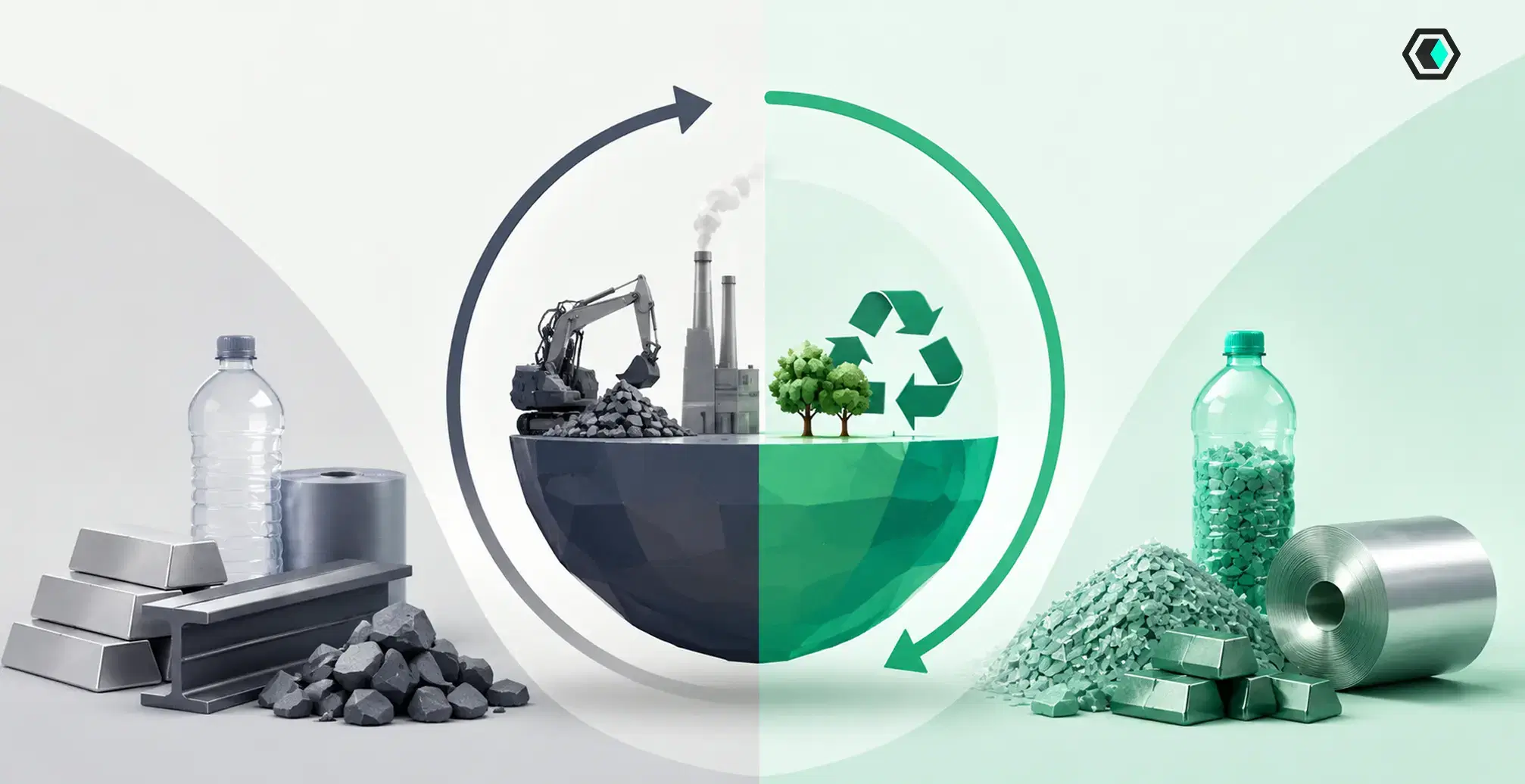
Recycled vs. Virgin Materials: How They Impact Product Carbon Footprints
This blog explains how choosing recycled or virgin materials changes a product carbon footprint (PCF), using published data for aluminium,...
Top 10 Sections of a Product Carbon Footprint Report With Checklist
Learn how to structure a Product Carbon Footprint (PCF) report with 10 essential sections covering the executive summary, study goal,...
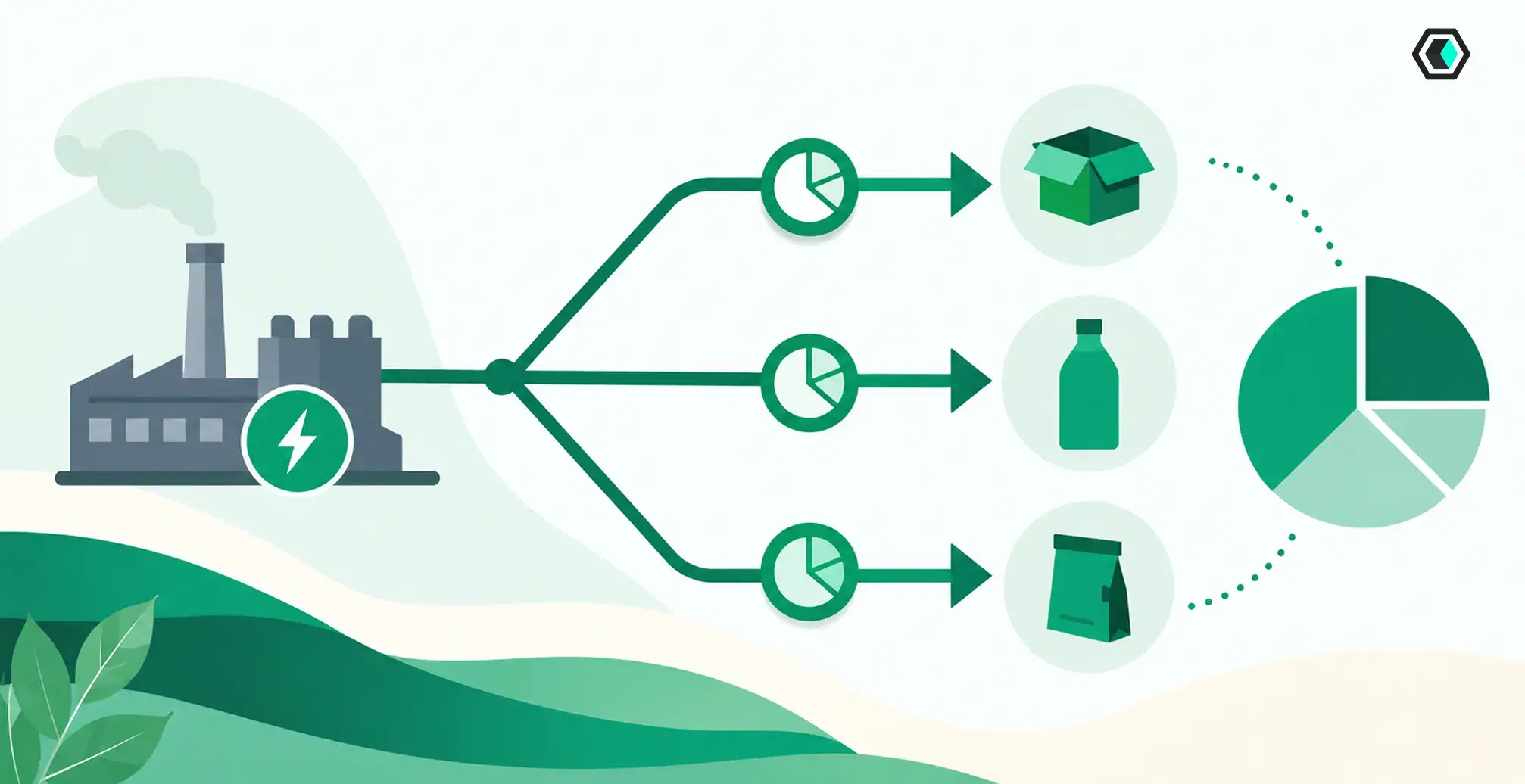
PCF Allocation Methods: How to Split Factory Energy Across Products
This blog explains how manufacturers can allocate shared factory energy across products to calculate reliable Product Carbon Footprints (PCFs). It...
Fueled by intelligent systems to elevate your reading experience.